

Expert Opinion. Based on comments by Turkish economist Hikmet Baydar to RIA Novosti (June 2026).
Annual inflation in Türkiye is above 30%, and local residents feel it every day. Visitors from Russia, however, as economist Hikmet Baydar observes, hardly notice any price rises at the resorts. The answer lies in exchange rates: the rouble has strengthened in recent years while the Turkish lira has weakened. Here is how this “double effect” works and what it means for the tourism business.
Key points
- Despite inflation above 30% in Türkiye, services for Russian tourists have barely become more expensive.
- In summer 2023 a dollar cost about 96 roubles; in the 2026 season, about 74 roubles — dollar prices became roughly a quarter cheaper for Russians.
- The lira weakened by almost 15% against the dollar in a year: from 39–40 to about 46 lira per dollar.
- If Russians spend less, it is due to reallocated budgets rather than higher prices at resorts.
- More than 6 million Russians visited Türkiye in 2025, keeping Russia a leading source of foreign visitors.
Why don’t Russians notice Turkish inflation?
The main reason is that the currencies moved in opposite directions. Tourism prices in Türkiye are largely tied to the dollar, and for Russians the dollar has become cheaper. According to Baydar, in summer 2023 a dollar cost around 96 roubles, while this season it is about 74 roubles. As a result, dollar prices have become roughly a quarter more affordable for Russian tourists.
| Indicator | Before | 2026 season |
|---|---|---|
| Roubles per dollar | about 96 (summer 2023) | about 74 |
| Lira per dollar | 39–40 (summer 2025) | about 46 |
| Annual inflation in Türkiye | above 30% | |
How does the lira exchange rate play in?
The second factor is the weaker Turkish currency. Last summer a dollar cost 39–40 lira; this season it is about 46 lira, meaning the lira has lost almost 15% against the dollar. Together with the stronger rouble this creates a “double effect”: Russian tourists’ spending is shielded from domestic price growth, which is keenly felt by people in Türkiye who earn their salaries in lira.
Will Russians keep travelling to Türkiye as actively?
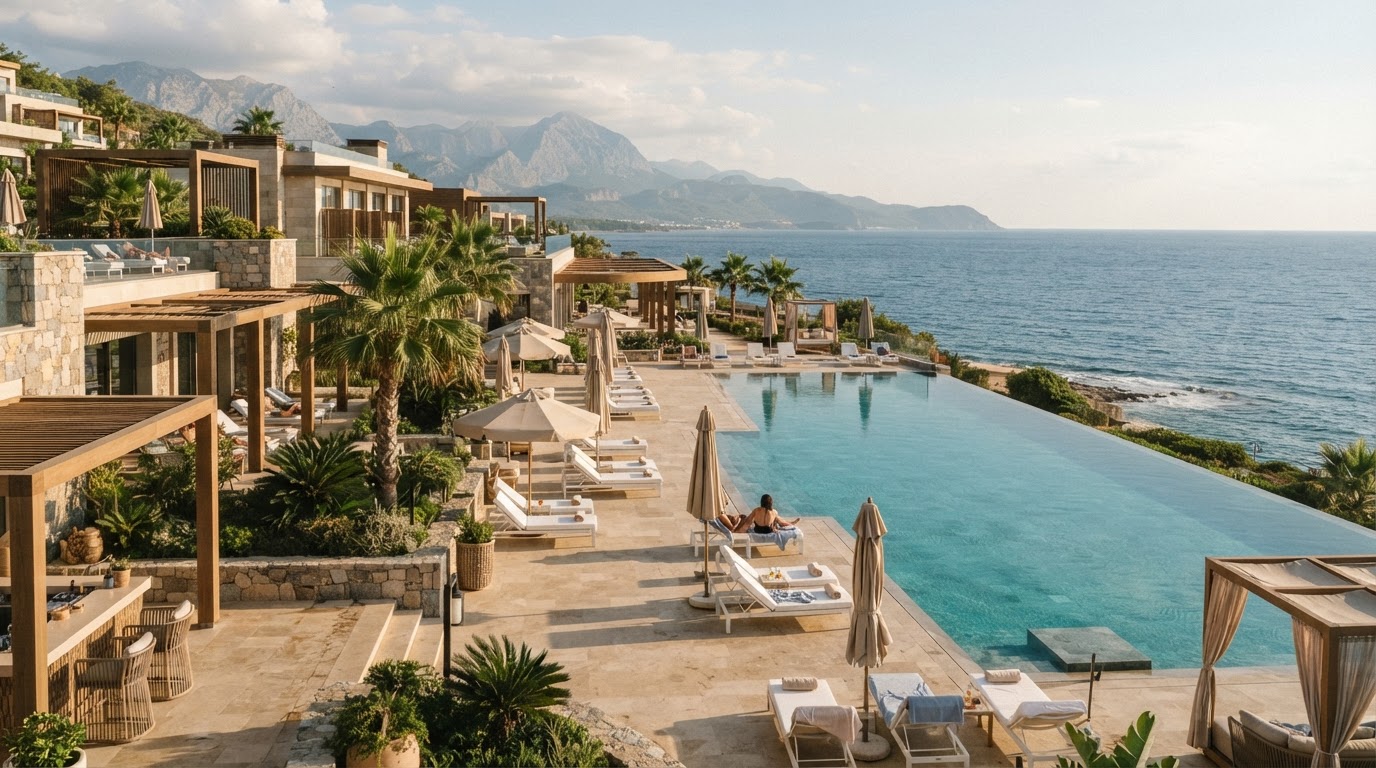
The economist sees no reason for interest in Turkish resorts to decline. If Russian travellers cut spending, he believes, it reflects reallocated household budgets, not higher prices. Statistics confirm the demand: more than 6 million Russian citizens visited Türkiye in 2025. The most popular destinations are the Mediterranean resorts of Antalya, Alanya, Kemer, Belek and Side.
Baydar warns, however, that as demand and hotel occupancy grow, prices may keep rising.
What it means for business (TRBW comment)
- For hotels and tour operators. Russians remain one of the most solvent and stable segments. Dollar-based pricing helps retain this flow even with high domestic inflation.
- For hotel suppliers. Hotels pay for food, staff and services in lira but earn revenue in foreign currency — a buffer that still requires careful procurement management.
- For tourists and business travellers. Compare prices in roubles, dollars and euros and watch the lira rate: the right payment currency can noticeably reduce costs.
- Risk of price rises. High occupancy in peak season is a signal to book early.
FAQ
Did holidays in Türkiye become more expensive for Russians in 2026?
According to Hikmet Baydar, hardly: a stronger rouble and a weaker lira offset domestic inflation of over 30%.
What is the lira-to-dollar rate in the 2026 season?
About 46 lira per dollar, compared with 39–40 lira last summer.
How many Russians visited Türkiye in 2025?
More than 6 million. Russia remains one of the leading sources of foreign tourists for Türkiye.
Who is Hikmet Baydar?
A Turkish economist and analyst who comments for Russian media on Türkiye’s economy, exchange rates and the tourism market.
Source
Hikmet Baydar’s comments to RIA Novosti, as reported by runews24.ru, 23 June 2026 — read the original (in Russian).
This article is for information purposes only. The expert’s views may not reflect the position of the TRBW editorial team. Exchange rates and figures are as of the date of the comment.