


🎧 Listen to the TRBW podcast on this article
⬇ Download audio (mp3, 19 min)
Key points
- As of November 2026, Black Sea shipping is in a serious security and logistics crisis: vessel traffic is down 37% year on year.
- Grain and oilseed shipments from Russian and Ukrainian Black Sea ports fell 63% in the third quarter; alternative routes cannot make up the lost volumes.
- Major carriers (Maersk, MSC, CMA CGM, Hapag-Lloyd, Arkas Line) have largely suspended calls at Russian and Ukrainian ports, and Maersk has introduced a war-risk surcharge for Bulgarian, Georgian and Romanian ports.
- A new grain corridor has not been agreed: the parties disagree on terms, and the central issue is a mechanism for inspecting and verifying vessels.
- Türkiye is looking for a balanced arrangement that keeps trade moving, addresses security demands and does not compromise the Montreux Convention.
What is happening to Black Sea shipping in 2026?
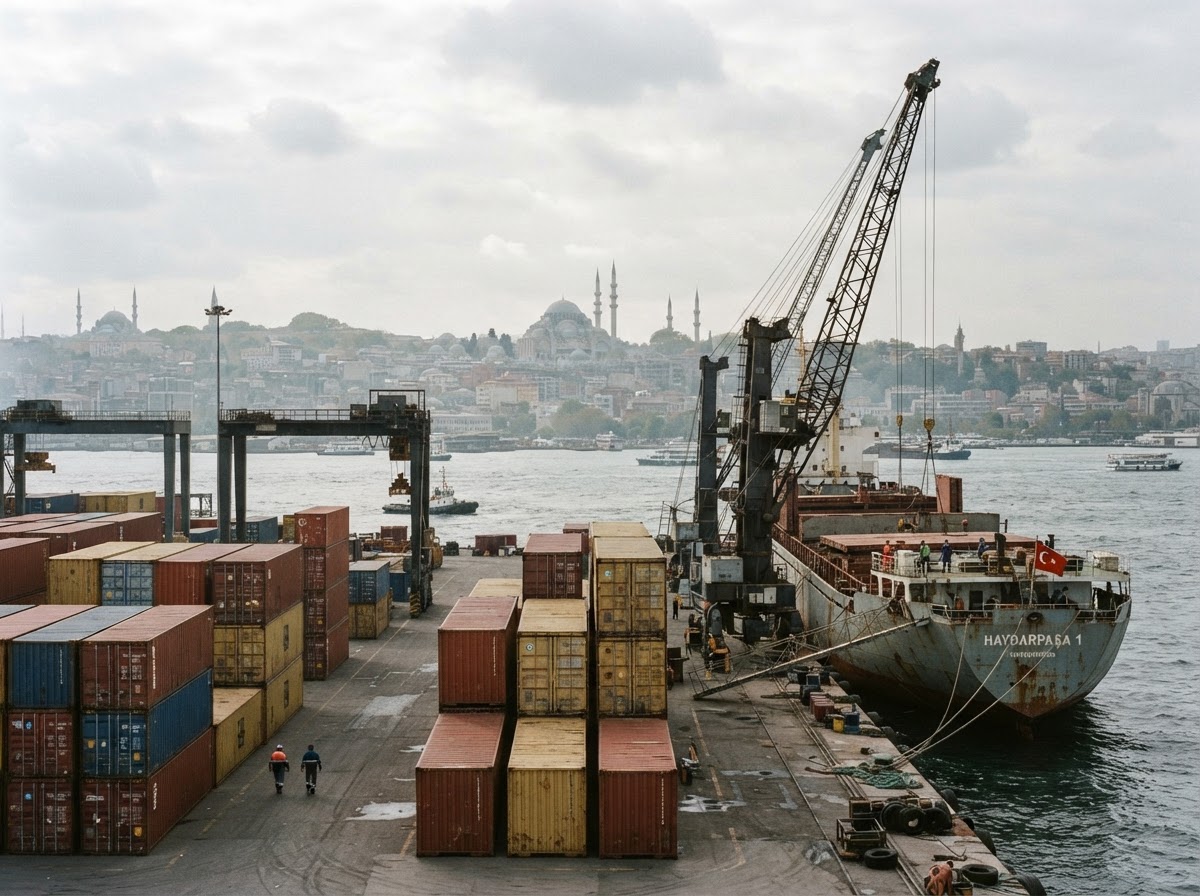
As of November 2026, maritime transport in the Black Sea faces a serious security and logistics crisis driven by a rise in attacks by unmanned aerial and surface vehicles on merchant ships. Vessel traffic in the region has fallen 37% year on year, and international maritime reports list the Black Sea among the most dangerous commercial routes of 2026.
More than 570 merchant vessels have been affected by attacks during 2026, and at least 40 seafarers have lost their lives. Incidents intensified in the autumn months.
Leading liner operators — Maersk, MSC, CMA CGM, Hapag-Lloyd and Türkiye’s Arkas Line — have largely suspended services to Russian and Ukrainian ports. Since 14 November 2026, Maersk has applied an additional war-risk operating charge for ports in Bulgaria, Georgia and Romania.
How far have grain and other cargo shipments fallen?
Shipments of Russian- and Ukrainian-origin grain and oilseeds from Black Sea ports dropped 63% in the third quarter. Other dry bulk cargoes such as steel and barley are also seriously disrupted.
Exporters are trying to redirect cargo to Baltic ports, Poland, inland Romania and rail. But limited border-crossing capacity and high overland transport costs mean the alternative routes cannot fully offset the volume lost in the Black Sea.
| Indicator | 2026 |
|---|---|
| Black Sea vessel traffic | −37% year on year |
| Grain and oilseed shipments from Russian and Ukrainian ports | −63% in Q3 |
| Merchant vessels affected | more than 570 |
| Maersk war-risk surcharge | from 14 November: Bulgaria, Georgia, Romania |
Türkiye, Ukraine and more than 30 countries are pursuing diplomatic efforts at the International Maritime Organization (IMO) and the European Union to secure commercial navigation and establish a moratorium on attacks against civilian shipping.
Why has a new grain corridor not been launched?
The main reason is that the parties disagree on the terms while tensions in the region have risen. Moscow is cautious about new proposals and argues that its demands under the previous deal were not met.
The Russian side says the 2022 agreement never removed the obstacles to its own agricultural and fertiliser exports. Without conditions such as reconnecting Rosselkhozbank to the SWIFT payment system and lifting insurance restrictions, it will not approve a new arrangement. Moscow is also unwilling to return to the old model, citing security concerns.
Türkiye’s proposal for a moratorium on attacks against merchant ships and ports in the Black Sea has not been accepted by Moscow, which argues that partial arrangements would move the parties away from a comprehensive settlement.
Why is Türkiye’s maritime sector sceptical about Ukraine’s compensation mechanism?
Ukraine has announced a state compensation mechanism for merchant ships damaged in the Black Sea. The Turkish maritime sector and experts see it as hard to apply in practice, for several reasons:
- Limited scope. The mechanism covers only part of the cases, and not every Turkish-linked vessel falls under it.
- Attribution. In drone attacks on the open sea, the parties often deny responsibility. Where no perpetrator is officially identified, compensation claims are likely to go nowhere.
- Fiscal capacity. The industry does not consider it realistic for a state running a budget deficit and relying on external financing to pay costly ship and cargo losses quickly and in cash.
- No double recovery. Under international maritime rules, an owner compensated by an insurer for war risk cannot also claim from the state for the same loss.
- Lengthy procedures. For uninsured vessels, loss assessment is slow and bureaucratic.
What does Russia want? A vessel inspection and verification mechanism
In the current consultations on navigation safety, Russia names inspection and verification mechanisms for vessels as a mandatory condition for any new agreement. The issue has come up against the backdrop of intensive Turkish diplomacy in late October and November 2026, as Ankara held talks with Moscow, Kyiv and the EU’s Black Sea littoral states on reviving the grain corridor and a moratorium on attacks against the civilian fleet.
Russia’s Ambassador in Ankara, Sergey Vershinin, referring to consultations with the Turkish side on protecting commercial shipping, stressed the need for reliable verification and inspection mechanisms. Moscow wants guarantees that civilian dry cargo ships and sea corridors will not be used for military purposes.
In effect, this would mean a return to inspections modelled on the Joint Coordination Centre in Istanbul in 2022–2023. The Russian side also links Black Sea security to an end to attacks on its own merchant ships and export infrastructure.
What role does Türkiye play?
Türkiye’s approach is pragmatic: address the security and inspection demands while building a balanced mechanism that preserves the speed of trade flows and makes no concessions on the Montreux Convention or the principle of regional ownership of the Black Sea.
Naval strategists such as retired Rear Admiral Cem Gürdeniz stress that Türkiye’s core task is to uphold Montreux firmly and prevent the conflict from spilling over into commercial shipping. Analysts believe a transparent vessel verification system could be the concession needed to remove threats to civilian ships.
What it means for companies trading through Türkiye
- Freight and insurance. War-risk surcharges and fewer calls by major lines raise Black Sea shipping costs — build this into contracts and pricing.
- Routes. Rerouting via the Baltic, Poland, Romania and rail is capacity-constrained and more expensive; plan lead times with a buffer.
- Türkiye’s role. If the parties agree on a verification mechanism, Istanbul could again become the coordination hub it was in 2022–2023, and Turkish ports and logistics firms would benefit from restored flows.
- Contract terms. Check who bears war risk under your contracts, whether the carrier holds war-risk cover and how claims are handled.
Earlier we looked at how the Black Sea shipping crisis is affecting Türkiye’s economy.
FAQ
Is there a Black Sea grain corridor now?
No. As of November 2026 no new agreement has been reached; talks continue with Türkiye’s mediation.
How much have Black Sea grain exports fallen?
Grain and oilseed shipments from Russian and Ukrainian Black Sea ports fell 63% in the third quarter of 2026.
What is blocking a deal?
Disagreement over terms: Russia wants restrictions on its agricultural exports lifted and a vessel inspection mechanism, while Türkiye’s proposed moratorium on attacks against merchant ships has not been accepted.
Which ports does the Maersk surcharge cover?
Since 14 November 2026 — ports in Bulgaria, Georgia and Romania.