

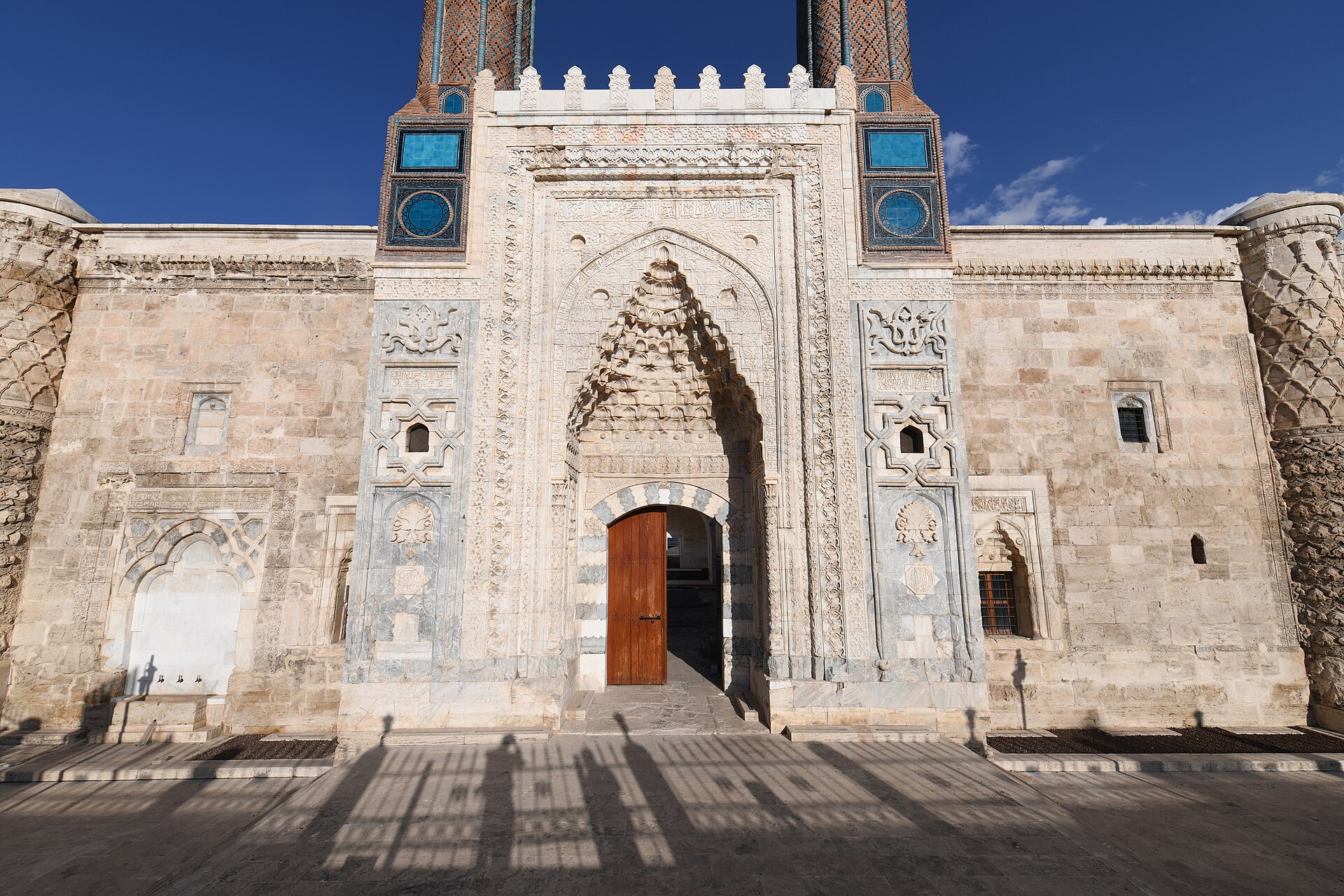
Gök Medrese, Sivas. Photo: Dosseman, Wikimedia Commons, CC BY-SA 4.0
Six in the morning at Ankara station. The high-speed train glides off, it is still dark outside, and the carriage already smells of tea from thermos flasks and simit from paper bags. The elderly man in a flat cap opposite starts talking within minutes: he is going “home” to Sivas, though he has lived in Istanbul for forty years. He shows photos of his grandchildren, then a photo of a huge pale dog with a black muzzle, with exactly the same pride: “Kangal. A real one, from Sivas.” Two and a half hours later the train pulls into a city where frost lies on the rooftops in the morning, the market sells knives sharp enough to shave with, and thirteenth-century minarets look down at you through turquoise Seljuk tiles. Not long ago this journey took the better part of a day. Now Sivas is closer than ever, and that is the perfect excuse to get to know one of the warmest and most underrated corners of Türkiye.
Where Sivas is and why it surprises you at first sight
Sivas sits at the very heart of Anatolia, on a high plateau where winters are harsh and the summer sky is so blue it looks painted. By area it is Türkiye’s second-largest province after Konya — around 28,000 square kilometres and seventeen districts, each with its own character. On the slopes of Kızıldağ in the İmranlı district rises the Kızılırmak, the “Red River,” the longest river that flows entirely within Türkiye. Near Zara lies Lake Tödürge, and in Gürün the tiny turquoise Lake Gökpınar, its water so clear you can see every pebble on the bottom. In winter, Mount Yıldız hosts one of the country’s youngest ski resorts, where, locals say, people go after seeing the prices at Uludağ.
Sivas has one remarkable feature that explains a lot. According to TÜİK, at the end of 2025 the province had 631,401 residents — 5,600 fewer than a year earlier — and in 2024 Sivas was named the province that people leave most. Meanwhile, 758,939 people registered to Sivas live in Istanbul — more than in Sivas itself. Turks joke that Sivas is not a city but a state of mind: you can take it with you to Istanbul, to Ankara, to Germany, and it never goes anywhere. Ask any Istanbul taxi driver where he is from and you will be amazed how often you hear “Sivas.” These people come home for the holidays, send money back, build houses in their villages, and feel a little sad every time they leave again.
History: from Sebasteia to the Seljuk madrasas
The city has changed names and rulers many times. In antiquity it was Megalopolis, then Sebasteia, “the venerable.” Romans and Byzantines lived here; then, at the end of the eleventh century, came the Turkish Danishmendids, followed by the Seljuks of Rum, under whom Sivas became one of the most brilliant cities of Anatolia. It stood at a crossroads of caravan routes, drawing merchants, scholars and master craftsmen. From that era comes Sivas’s greatest treasure: madrasas that still make visitors stop mid-sentence.
In 1271 three madrasas were going up in Sivas at once, like an architectural contest that everyone won. For the Gök Medrese, the “Blue Madrasa,” the vizier Sahib Ata commissioned a portal carved so finely that the stone looks like fabric, and covered its minarets in the turquoise tiles that gave the building its name. The Çifte Minareli Medrese, the “Twin Minaret Madrasa,” is today little more than a façade — but what a façade: its paired minarets have become the symbol of the city. The Buruciye Medrese, with its graceful courtyard and founder’s tomb, is now a cosy place to drink tea among seven-hundred-year-old walls. And next door stands the Şifaiye Medrese, built in 1217 by Sultan Kaykaus I as a hospital and medical school, one of the oldest in Anatolia. Legend says patients were treated with music and the sound of running water; it is hard to verify today, but sitting by the fountain in the courtyard, you want to believe it.
Divriği: lace carved in stone
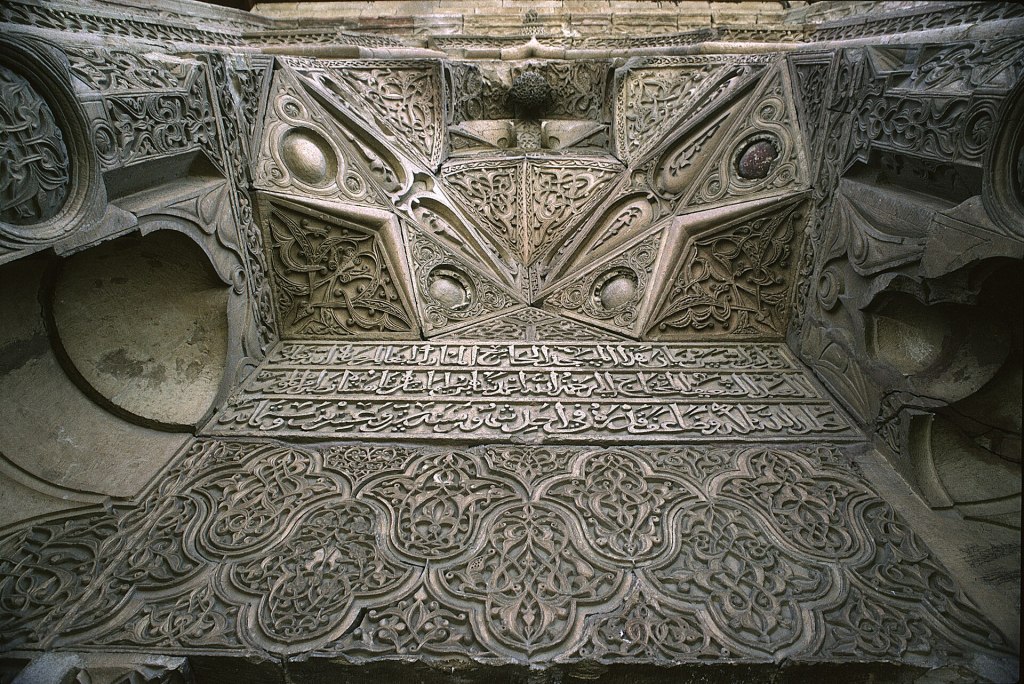
If you only have one day in Sivas, spend it on the road to Divriği. This small town about 170 kilometres from the centre guards the Great Mosque and Hospital, built in 1228–1229 by Emir Ahmed Shah and his wife Turan Melek. In 1985 the complex became one of Türkiye’s very first UNESCO World Heritage Sites, together with the Historic Areas of Istanbul and Göreme. Its portals are called “stone lace”: the carving is so deep, sculptural and fantastical that it seems the mason did not cut the stone but moulded it from wax. Locals love to show you the “shadow of a praying man” that appears on the north portal at certain hours, and a shadow resembling a woman reading the Qur’an — each time you wonder how medieval craftsmen calculated the light.
For nine years the mosque stood in scaffolding, and in May 2024 it reopened for prayer and visitors. Around 190 surrounding buildings were acquired and cleared so the monument could finally breathe. Since then thousands have come, many on the famous Doğu Ekspresi, the tourist train that stops in Divriği on its way to Kars. Divriği is known for more than lace, by the way: beneath these mountains lie major iron-ore deposits that have been mined since the middle of the last century. Beauty and industry live side by side here, as they so often do in Anatolia.
September 1919: the Sivas Congress
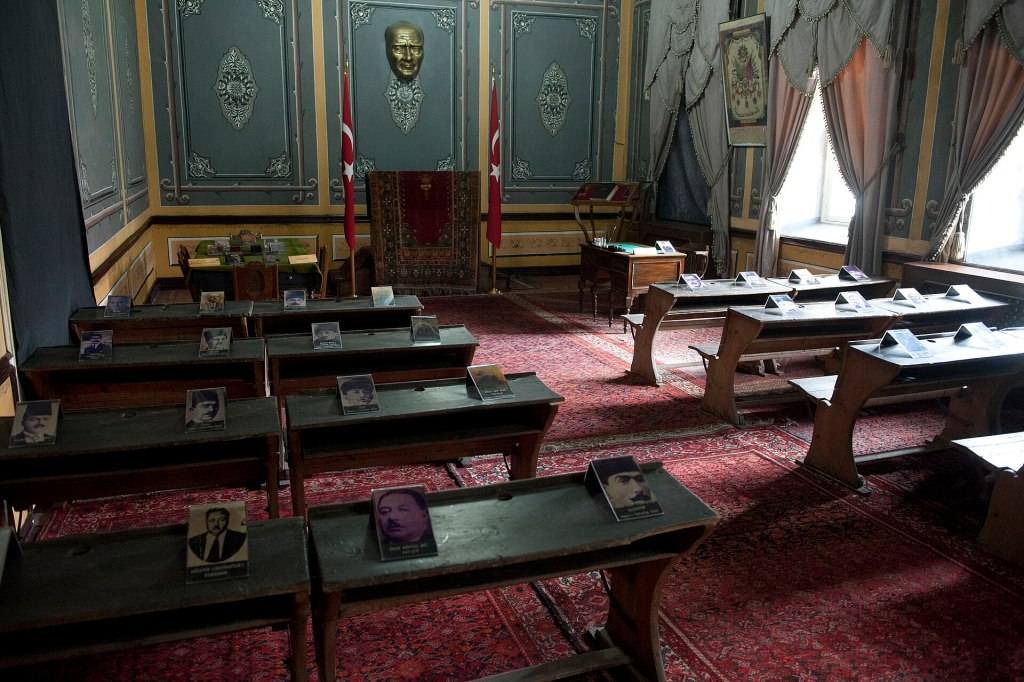
For every Turk, Sivas is also the city where the country’s fate was decided. From 4 to 11 September 1919, in the building of the old lycée, the Sivas Congress brought together Mustafa Kemal and delegates from across Anatolia, who united scattered resistance groups into one movement and declared that the country would not be divided. Today the building houses the Atatürk Congress and Ethnography Museum. The assembly hall has been kept almost as it was: wooden desks, red flags, silence. Schoolchildren come in whole classes, and grown-ups sometimes linger by the window of the room where Atatürk stayed longer than they meant to. It is one of those places where history lives not in a textbook but in the creak of the floorboards.
The land of minstrels: songs all of Türkiye knows
Sivas is called the “land of âşıks,” the folk poet-singers who for centuries wandered Anatolia with a saz. Pir Sultan Abdal, the great sixteenth-century poet whose verses on love, justice and steadfastness are still sung today, came from the village of Banaz. Âşık Ruhsati came from Kangal. And Âşık Veysel — the blind poet from Sivrialan village in Şarkışla, born in 1894 — came from here too. His song “Uzun ince bir yoldayım” (“I am on a long and narrow road”) seems to be known by every Turk: it is sung at weddings and farewells, in the army and in student dorms, and almost always someone wipes away a tear. Veysel lost his sight to smallpox as a child, but, as they say in Sivas, he saw more than the sighted. His house-museum in Sivrialan is small, modest and deeply moving.
The story of the minstrels has a painful page too, one people in Sivas speak of quietly. On 2 July 1993, during a festival honouring Pir Sultan Abdal, a mob set fire to the Madımak Hotel where participants were staying; 35 people died — poets, musicians, festival guests and hotel staff. Today the building is a Science and Culture Centre, and every year on that date people gather to remember the victims. Sivas remembers, and that too is part of its character.
The Kangal: a dog that became a legend
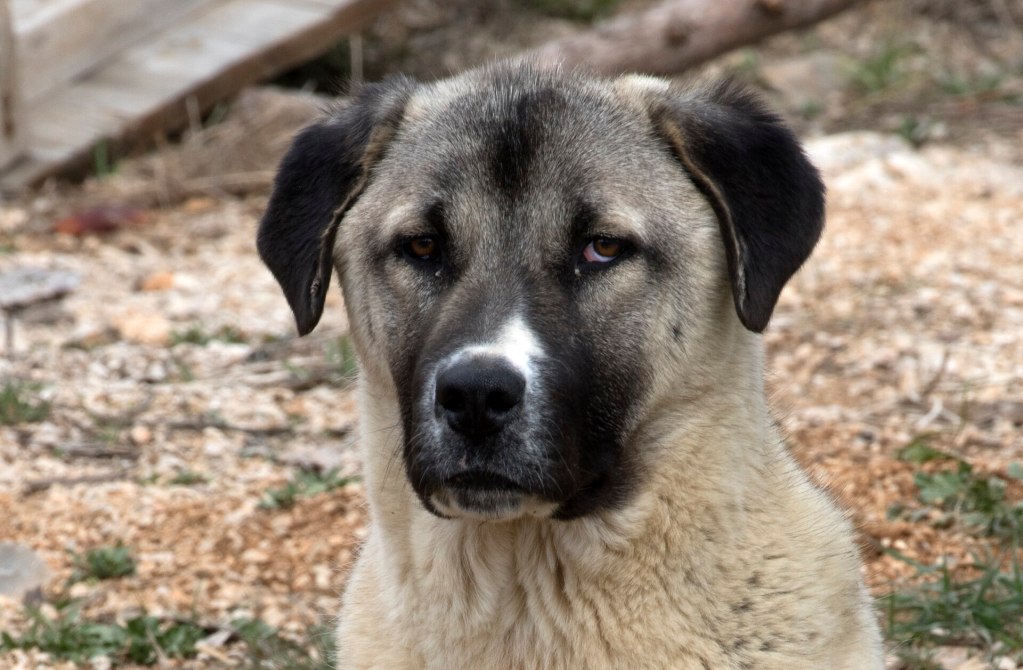
Ask a Turkish child what Sivas is famous for and the answer will probably be one word: “Kangal.” This huge, sand-coloured shepherd dog with a black “mask” comes from the Kangal district, and the people of Sivas treat it as a family member and a national treasure at once. The Kangal guards flocks against wolves; it is calm, clever and fiercely loyal. There are dozens of stories about it: how one dog drove off a wolf pack, how another brought stray sheep home on its own. Kangal puppies travel all over the world, and in Türkiye, meeting a real Kangal in the street is like seeing a living legend.
Kangal has another wonder: Balıklı Kaplıca, the “fish spring.” Its warm water is home to small fish affectionately called “doctor fish,” which gently nibble away dead skin; for years people with psoriasis and eczema have come here from Türkiye, Russia, Kazakhstan and Europe. Doctors are cautious about such miracles, but visitors insist that after a week in the spring their skin is softer and their mood brighter. Either way, the feeling of a hundred tiny fish tickling your feet is impossible to forget.
Sivas at the table
Sivas cuisine is the cooking of cold winters and generous hosts. Its pride is Sivas köfte: oblong meatballs with very few spices, grilled over charcoal with peppers and tomatoes and served with flatbread. It was registered as a geographical indication back in 2011, and in February 2026 it was joined by Sivas kellesi, roasted lamb’s head, a dish for the brave and true connoisseurs, bringing the number of Sivas geographical-indication products to twenty-two. Try peskütan soup made with a fermented dairy base, hingel — local dumplings with butter and yoghurt — flaky katmer, veal pastırma cured with local rock salt, pide from Ulaş and pickled wild rhubarb, pezik. Divriği has its own pilaf, and at the market be sure to buy a Sivas knife: local smiths make them by hand, and it is a registered brand too. People in Sivas joke that their knife will outlive its owner and his grandchildren.
The economy: trains, wagons and rock salt
Sivas is not only history but a working economy with character. The city has long been a railway hub where lines to the east and north meet, and at the TÜRASAŞ plant, heir to the famous TÜDEMSAŞ, freight wagons are built. In recent years it has produced wagons for carrying armoured vehicles and tank wagons for the military, and in 2026 work began on a rooftop solar plant expected to generate about 4.5 million kilowatt-hours a year. In April 2023 the Ankara–Sivas high-speed line opened: a trip that used to take around twelve hours shrank to about two and a half, and in its first two years the line carried some 1.66 million passengers. For a city that used to be “far from everything,” that is a small revolution.
The backbone of the regional economy is agriculture and livestock: grain, sugar beet, meat and milk. Alongside them come iron-ore mining in Divriği, cement and building materials, and food processing. Sivas’s first organised industrial zone, opened in 1989, is almost full — the governor put occupancy at 99 per cent in October 2025 — while the new Demirağ zone is being built with tens of thousands of future jobs in mind. Provincial exports are still modest, about 82 million dollars in 2024, but for Sivas that is more a growth point than a ceiling. Under the general investment incentive system Sivas is in the fourth region, and in recent years additional support programmes have applied to investments in industrial zones, including through the ORAN development agency, which covers Kayseri, Sivas and Yozgat. Specific conditions change, so they are worth checking before launching a project. The city has two universities, Sivas Cumhuriyet University and Sivas University of Science and Technology, so young engineers are here; they just need a reason to stay.
What Sivas means for Türkiye
Sivas is a mirror of the Anatolian heartland in which the whole country is reflected. Here you can see how big cities draw young people away, how hard it is for small towns to keep them, and how much a single new railway line can mean to a province. But you can also see what makes Türkiye impossible not to love: loyalty to one’s roots, the ability to remember and to forgive, and a hospitality that turns a stranger into “one of us” within five minutes. Sivas people in Istanbul form hometown associations, organise Sivas food festivals and help fellow townspeople find work. In a way, Sivas is one huge family scattered across the country and the world, which gathers together every time someone starts singing “Uzun ince bir yoldayım.”
How to talk about Sivas with Turkish partners
If your counterpart turns out to be from Sivas — and as we have seen, the odds are high — you are holding a golden key. Ask about Kangals and you will hear the story of their grandfather’s dog. Say you have tried Sivas köfte and you may well be invited to try “the real one, the way Mum makes it.” Mention Âşık Veysel and the conversation will turn very warm. Sivas people are proud of their madrasas, their resilience and their winters (“it’s cold here, but the people are warm,” they will tell you without fail). Leave the subject of Madımak alone unless they raise it; if they do, listen with respect. And remember that in Anatolia agreements rest on trust: if you are invited for tea, accept, and do not rush important decisions. Here people get to know each other first and sign later.
For business, the region is interesting in several directions: meat and dairy processing and geographical-indication products that can be marketed as premium brands; supplies for the railway industry; mining and building materials; thermal and ski tourism, where there is still plenty of room; and solar energy on a sunny high plateau. Let us name the challenges honestly too: long snowy winters, young people leaving, and a limited pool of skilled staff. But the high-speed train to Ankara and support for industrial zones are changing the picture, and an early investor here gets what is long gone in Istanbul: the attention of local authorities, the loyalty of locals and the sense of building something together with the city.
Sivas in numbers
| Indicator | Value | Year |
|---|---|---|
| Provincial population | 631,401 | 2025 |
| Sivas natives in Istanbul | 758,939 | 2025 |
| Area | ≈28,000 km², 2nd largest | — |
| Exports | ≈$82 million | 2024 |
| Ankara–Sivas by train | ≈2 h 35 min | since 2023 |
| Geographical-indication products | 22 | 2026 |
Instead of an epilogue
Evening falls early in Sivas, and the city starts to look like an old postcard: floodlit Çifte Minareli minarets, the smell of charcoal and grilled meat from the köfte houses, a few snowflakes over the square. The elderly man from the train is probably sitting at his relatives’ table by now, telling them for the hundredth time how Istanbul has changed. Tomorrow he will go to the market for a knife for his grandson, in the evening he will put on an Âşık Veysel cassette, and in a week he will travel back, taking Sivas with him, as millions of his fellow townspeople did before him. And if you ever find yourself in this city, be ready: you will be given tea, fed köfte and asked when you are coming back. Because Sivas, like all of Türkiye, does not let go of those who have once opened their hearts to it.
FAQ
What is Sivas famous for?
Its thirteenth-century Seljuk madrasas, the UNESCO-listed Great Mosque of Divriği, the 1919 Sivas Congress, the minstrels Pir Sultan Abdal and Âşık Veysel, Kangal dogs, the Kangal fish spring and Sivas köfte.
How do I get from Ankara to Sivas?
The easiest way is the high-speed train, which since 2023 has covered the route in about 2 hours 35 minutes. There is also Sivas Nuri Demirağ Airport.
What should I eat in Sivas?
Sivas köfte, peskütan soup, hingel, katmer, pastırma, Ulaş pide and pickled pezik; take home a Sivas knife as a souvenir.
Is Sivas a good place to do business?
There are opportunities in food processing, railway supplies, building materials, tourism and energy. The province is in the fourth investment-incentive region; check current support conditions in advance.
Sources
TÜİK (2025 population, internal migration); Sivas Provincial Directorate of Culture and Tourism and the TÜRKPATENT geographical-indication database; UNESCO (Great Mosque and Hospital of Divriği); Ministry of Transport and Infrastructure and TÜRASAŞ; Sivas Governorate and Sivas Chamber of Commerce and Industry (STSO); ORAN Development Agency; reporting by AA, DHA, NTV, Karar, Daily Sabah and Sanayi Gazetesi. Photos: Wikimedia Commons (Dosseman, Zeynel Cebeci), CC BY-SA 4.0.
This article is for information purposes. Figures come from public sources as of November 2026; some indicators (2025 exports, GDP per capita, tourist numbers) have not yet been published.