



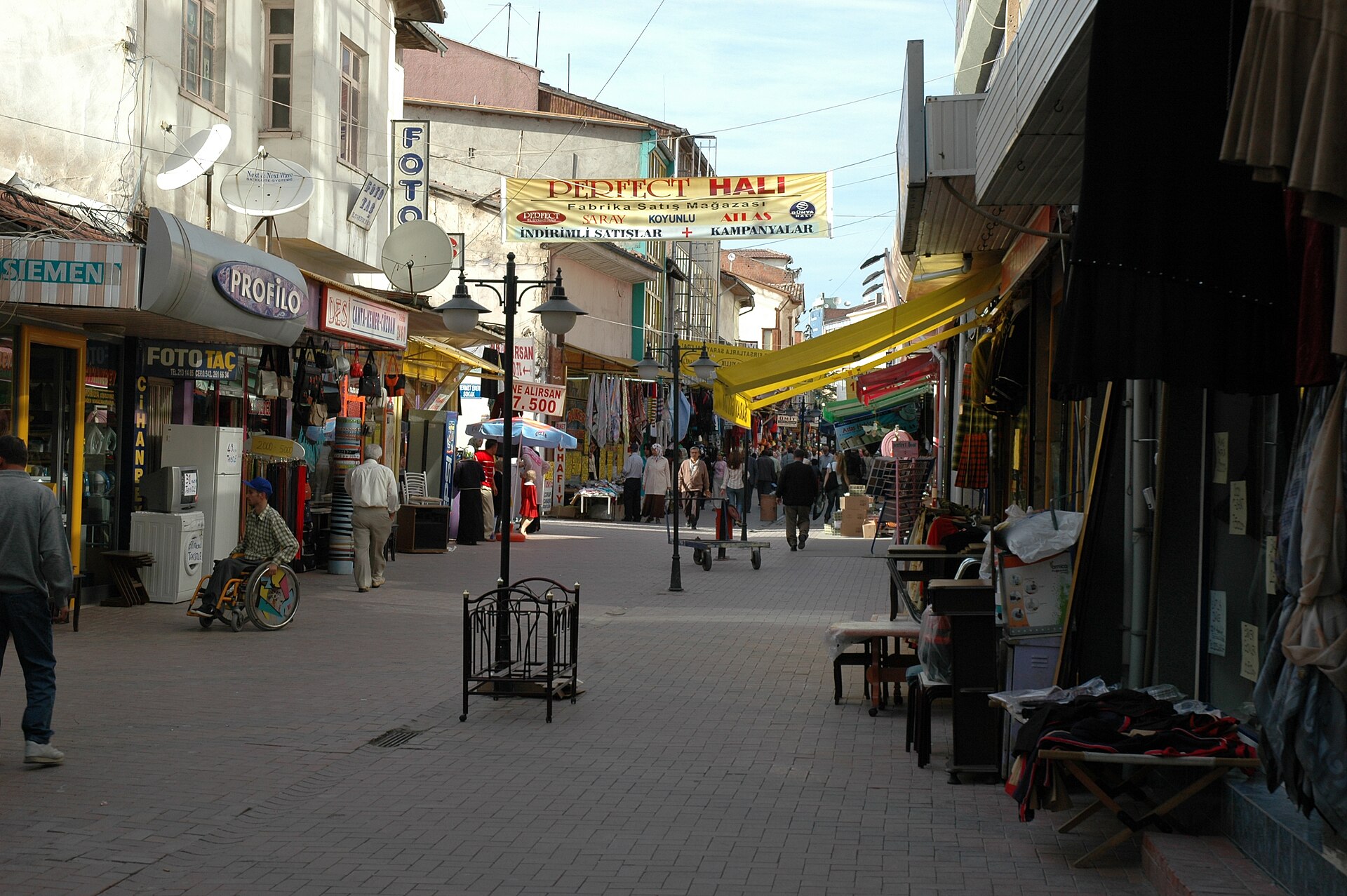
Çorum. Photo: Dosseman, Wikimedia Commons, CC BY-SA 4.0
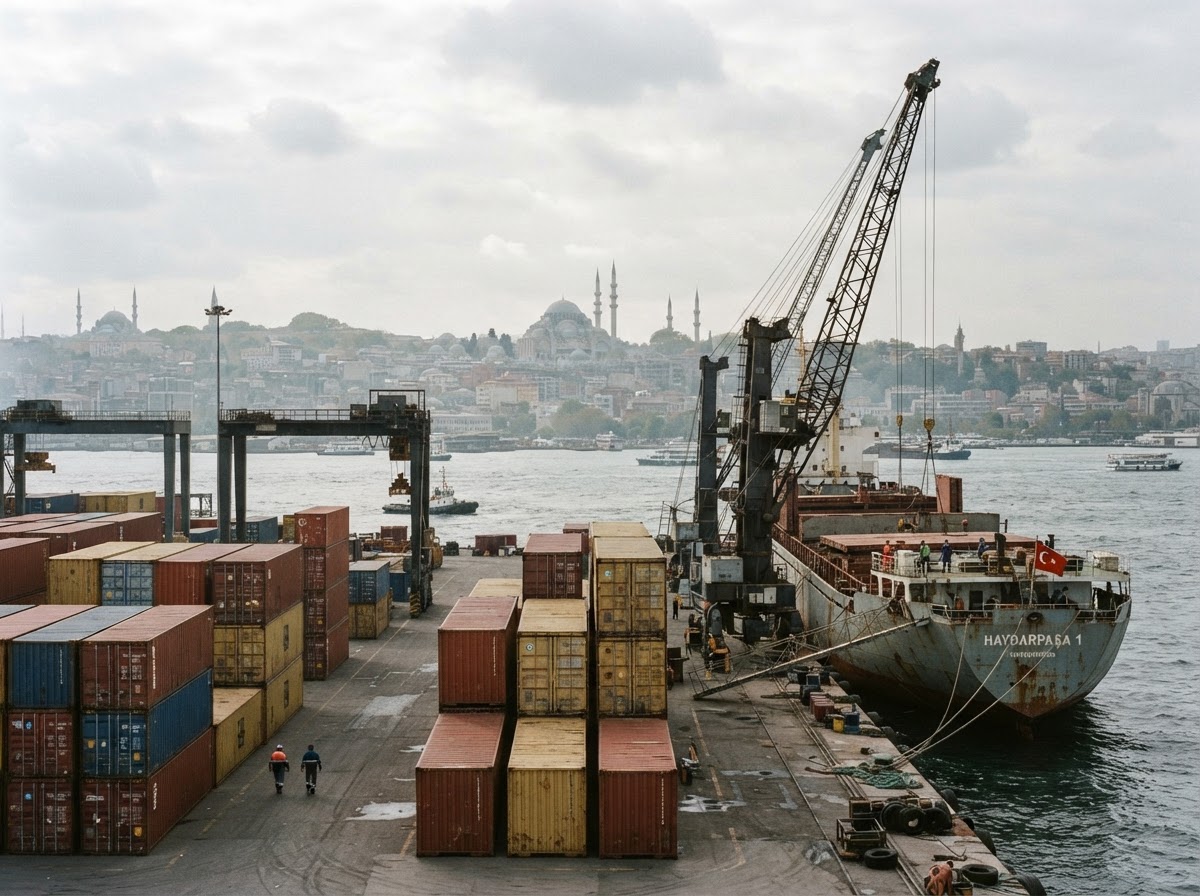
Picture an ordinary Istanbul office at lunchtime. Lentil soup is steaming on the table, someone is already pouring tea into tulip-shaped glasses, and a colleague is proudly explaining how he saved money on lunch: he ordered from a restaurant on the other side of the city because it had a ten per cent discount, then paid the courier three times what he saved. There is a pause, and someone, without looking up from their plate, says: “Senin yaptığını Çorumlu yapmaz.” The whole table bursts out laughing, and the loudest laugh belongs to our budget genius himself. The foreigner at the table smiles politely and understands nothing: what does Çorum, a small city in Central Anatolia, have to do with it? Five minutes later the talk turns to weekend plans, someone suggests a trip to Yozgat with a perfectly straight face, and everyone is laughing again. That is Türkiye in a nutshell: a country that can turn any awkward moment into a reason to laugh together, and where the laughter carries far more warmth than mockery. To understand it, let us take a little journey — through Turkish folklore, internet satire, Hittite antiquity and two cities that know how to laugh at themselves better than many capitals do.
“Where are you from?” — where Turkish jokes begin
In Türkiye the first question you hear when you meet someone is not “What do you do?” It is “Memleket neresi?” — “Where are you from originally?” And it is not small talk: it is an invitation to share what matters most. A person may have been born in Istanbul, studied in Ankara and worked in İzmir for twenty years, yet they will answer with a smile by naming the town where their father or grandfather was born. A memleket is not where you live; it is where your heart belongs. It is where the aunts live, where you go back for the holidays, where you bring home village cheese, quince jam and the latest news about every relative at once. This deep attachment to home is one of the most touching things about Turkish people, so it is no surprise that a country where everyone has a memleket also has a huge, good-natured store of jokes about other people’s hometowns.
Turkish folklorists call this a fıkra tipi, a “joke type”: not a real person but a mask with a set of habits, and the moment the mask appears, the listener already knows what is coming. The man from Kayseri is a trader so clever he could sell you your own coat and leave you delighted with the deal. Temel from the Black Sea is hot-headed, quick-witted and gloriously unpredictable; his logic always wanders off somewhere unexpected and sometimes turns out to be brilliant. Alongside these national heroes there are dozens of local characters known only in their own region, which researchers call mahallî tip. Neighbouring towns have traded, competed and married into each other’s families for centuries, and of course they tease each other the way families do. That is how these characters are born.
The fun part is that jokes travel across the country like caravans on the old Silk Road. The same story about a crafty farmer and a hapless official is told about the next town over in one region and about a completely different town three hundred kilometres away. The plot stays; only the address changes. So when a Turk begins with “Once upon a time, a man from Çorum…”, it does not mean the story happened in Çorum or that people there behave that way. The city name works like the clef at the start of a musical stave: it does not tell you the melody, it only tells you which key to hear it in.
Çorum, or the story of one saying
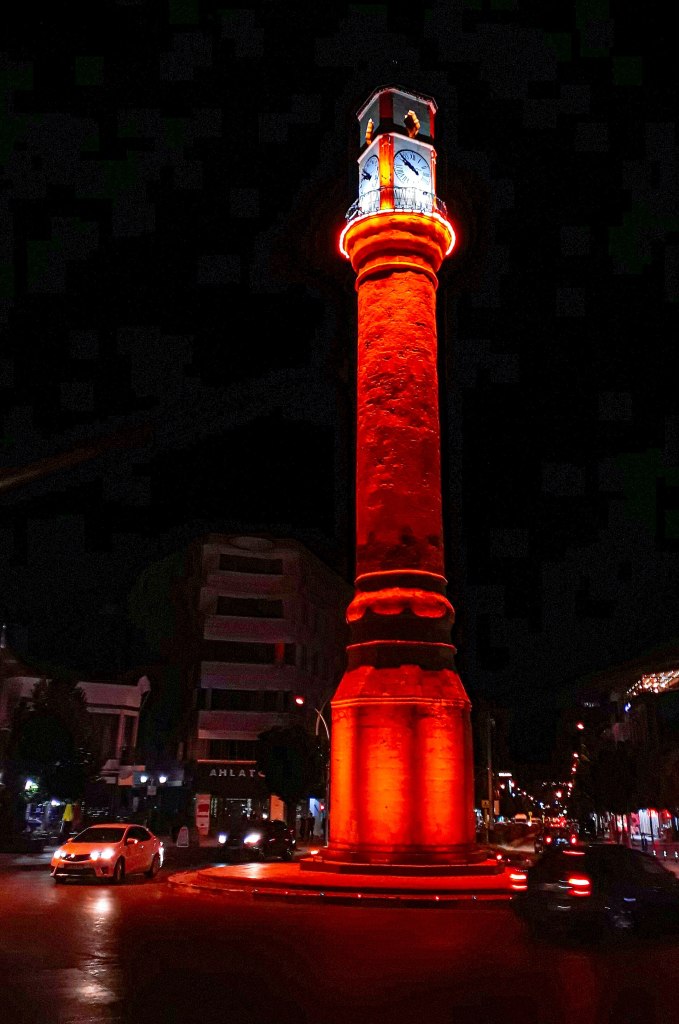
Çorum has no Temel of its own, no stock character with a whole series of jokes. What it has instead is a phrase the entire country knows and loves: “Senin yaptığını Çorumlu yapmaz”, “Not even someone from Çorum would do what you did.” You say it when there is nothing left to do but throw up your hands: a friend turns up to a business meeting in slippers, a neighbour sells his car to buy exactly the same model, only older and more expensive, a colleague hits “reply all.” There is no malice in it. It is a friendly flick on the nose, said with that special Turkish intonation in which every reproach comes wrapped in affection: well, my friend, today you have truly outdone yourself. Çorum simply serves as the measure of the unthinkable, and that role earned the city its nationwide and entirely affectionate fame.
Nobody knows where the saying comes from, and that is half its charm. The most popular legend sounds like a ready-made folk tale. Once upon a time in Çorum, the tax collector came knocking at a man’s door. The man did not feel like paying, and simply saying he had no money would have been far too dull. So he tucked his donkey into his own bed, covered it lovingly with a quilt and told the official that his old father was gravely ill, so this was hardly the time for taxes. The trick was so audacious, they say, that it eclipsed every earlier prank by his fellow townsmen, who were no slouches themselves. And so came the verdict: not even someone from Çorum would have thought of that. Whether to believe it is up to you; it does look suspiciously like one of those travelling jokes whose hero simply changed address.
The second legend is far nobler and perhaps says more about the soul of Anatolia. In this version, the words about Çorum began as praise. When Circassian refugees fleeing the Caucasus arrived in the region, the people of Çorum are said to have welcomed them so generously and warmly that others spoke of them with admiration: what the people of Çorum did, no one else could do. Later, as sometimes happens with compliments, the phrase was turned around and admiration became gentle teasing. Beautiful, moving, and just as impossible to prove as the donkey story: neither version has a document to settle the matter. But even if the second legend is not quite true, it sounds very much like the truth about Türkiye — a country where a guest is still welcomed as if they were a long-awaited relative.
And the loveliest part of the story is what Çorum did next. The city could have taken offence and demanded respect. Instead, its people smiled and turned the saying on its head: “Çorumlu’nun yaptığını herkes yapamaz” — “Not everyone can do what a Çorum native does.” You will now hear it in city promotion, food campaigns and local success stories. It is a textbook marketing lesson and a lesson in life: if the whole country knows one joke about you, make it your slogan, and everyone will be laughing with you.
Yozgat, or the town where nothing happens
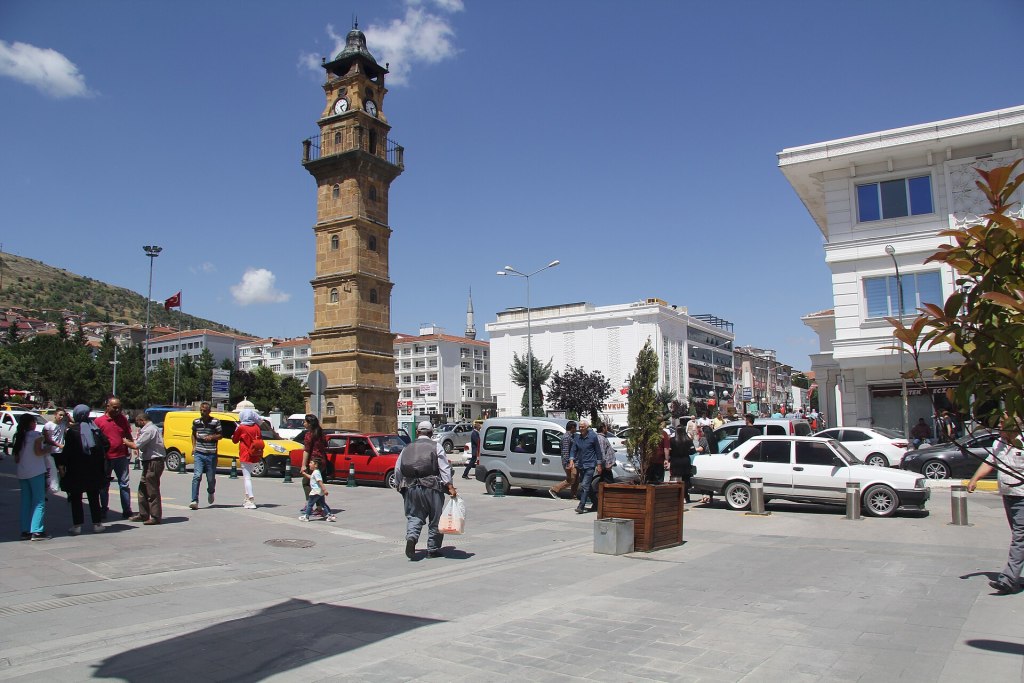
Yozgat’s story is entirely different and very much of our time. Old folk jokes have little to do with it: the internet made Yozgat famous. Zaytung, Türkiye’s answer to The Onion, spent years publishing “news” from Yozgat, and all of it was about the same thing: nothing happening there. Once again, nothing happened in Yozgat. Another resident moved to Ankara, and the population dropped noticeably. Scientists are still debating whether Yozgat really exists. Social media joined in with delight, and the question “Yozgat’ta ne var?” — “What is there in Yozgat?” — became the country’s favourite rhetorical joke. Yozgat turned into an affectionate symbol of the quiet Anatolian town where time runs a little slower, neighbours know each other by name and the biggest event of the season is the opening of a new bakery.
Of course, every good joke grows from real soil. Yozgat has been through some difficult years: the Tekel beer factory closed, the YİMPAŞ retail chain the city was once proud of disappeared, and Yozgatspor, a club that once played in the Süper Lig, slipped down to the amateur leagues. Young people, as in small towns all over the world, leave to study and work in the big cities, above all in nearby Ankara. Residents say they would love more cafés, concerts and life on the streets in the evenings, and feel the city could receive more attention and investment. All of this added up to the image of the “quiet town” that is so easy to tease kindly.
And here comes the most touching part. When BBC Türkçe journalists went to Yozgat to find out how people felt about the Zaytung jokes, they may well have expected resentment. What they heard was laughter. Many residents said they found the jokes funny and put it roughly like this: “Even if it is through joke news, at least people are talking about us.” That sentence holds the whole of Anatolian wisdom: take a joke with dignity, smile and turn it to your advantage. A city that long felt overlooked was suddenly on everyone’s lips. You may hear that in jokes the man from Yozgat is a “naive but blunt Anatolian,” but there is no solid evidence that such a fixed type really exists. The jokes are not about people; they are about place, about small-town life itself, and Yozgat simply became its charming face.
A city beyond the punchline
It would be a shame to know Çorum only for its saying, because this city knows how to surprise. Start with leblebi, the roasted chickpeas Turks eat by the handful with tea, with football, with long conversations among friends. Ask any Turk where the best leblebi comes from and the answer will almost certainly be Çorum; a bag of “Çorum leblebisi” is the classic gift to bring home. But the real wonder lies outside the city, in the Boğazkale district: the ruins of Hattusa, capital of the Hittite Empire and a UNESCO World Heritage Site. Standing among its walls, where kings of one of the great powers of the ancient world ruled more than three thousand years ago, you feel how deep Türkiye’s history runs and how many layers of civilisation Anatolian soil holds. Nearby lies another Hittite treasure, Alacahöyük. So the “city of jokes” guards one of the oldest capitals in the world. Add İskilip dolması, made to an old local recipe, Osmancık rice, known far beyond the province, and the hard work that has earned Çorum a place among the “Anatolian Tigers” — provinces that grew on their own manufacturing of bricks and building materials, machinery, flour and, of course, chickpeas. Not bad for a city where “not even someone from Çorum would do that.”
Yozgat has its own answer for the jokers, and it smells of pine. On the hill above the city stands the Çamlık forest, which in 1958 became Türkiye’s very first national park. Think about it: “the town with nothing in it” launched the country’s entire era of national parks. Nearby, in Sorgun, thermal springs draw visitors from all over the country, and on a mountain not far away lie the ruins of the ancient city of Kerkenes, where archaeologists have worked for years. Yozgat hosts will insist you try arabaşı soup and parmak çöreği, little sweet buns — and good luck leaving the table without a second helping. Since 2023 the Ankara–Sivas high-speed train has stopped in Yozgat, so the “remote province” is suddenly right next door to the capital. Perhaps one day Zaytung will run the headline “Something happened in Yozgat.” And it will be perfectly true.
What the laughter says about Türkiye
Jokes about Çorum and Yozgat may sound like idle chatter over tea, but they are one of the ways Turkish society talks to itself — lightly, kindly, without pomposity — about things that matter to everyone: how fast the big cities are growing and how to keep small towns full of life, young people moving to Istanbul and Ankara, and making sure development reaches every corner of a vast country. Turks have a gift for talking about serious things with a smile, and it is a real strength: here laughter does not divide but unites, because people are not laughing at strangers but at their own.
The sociologist Christie Davies, who spent his career studying humour around the world, noticed a curious pattern. Jokes about “simple folk” almost never target complete strangers. Their heroes are people very much like the tellers — speaking the same language, living in the same country — but a little way off from the big centres. The centre looks at them as if in a mirror and laughs because it recognises itself. Yozgat fits this pattern perfectly, Çorum only partly, since its fame rests not on an image of the provinces but on a single saying.
There are other reasons we laugh, too. Laughter is born when an expectation breaks: the city name sets up a script and the punchline flips it. But Turkish humour has a nobler side as well: self-irony. When you are the first to laugh at yourself, a label stops being a stigma and becomes a sign of belonging, a password by which people from home recognise each other. That is exactly what both cities did: Çorum with its flipped slogan, Yozgat with its philosophical “at least they talk about us.” It is something all of us could learn from Türkiye.
How to join the joke without offending anyone
For a foreigner who lives or works in Türkiye, all this is a real treasure. Knowing these jokes shows your Turkish counterpart that you have come to love their country more deeply than “kebabs, the Bosphorus and TV series.” But, like any treasure, it needs careful handling. Start with the same question Turks start with: “Memleket neresi?” If your partner turns out to be from Çorum, do not rush to show off the saying. Say instead that you have heard Çorum makes the best leblebi in the country, and watch their eyes light up as a business conversation becomes a friendly one. If they make the “Senin yaptığını Çorumlu yapmaz” joke themselves, laugh along freely: it means you have been accepted.
Yozgat calls for even more tact. “What is there in Yozgat?” from a Turkish friend is a gentle tease; from a guest at a business meeting it can sound awkward. But saying “I know Yozgat has Türkiye’s first national park” will almost certainly earn you a surprised and very warm smile. And the biggest secret: Turks adore people who can laugh at themselves. Share a couple of jokes about your own hometown and you will become one of the family faster than after ten formal dinners. If you work in marketing, remember Çorum’s lesson: a brand that plays lovingly on a phrase the whole country knows sticks instantly. Just do it together with locals, because a joke about someone’s hometown only works when you can hear the love in it.
Çorum and Yozgat: a cheat sheet
| Çorum | Yozgat | |
|---|---|---|
| The joke | “Senin yaptığını Çorumlu yapmaz” | “The town where nothing happens” |
| Where it started | A saying and local legends | Zaytung and social media |
| Locals’ comeback | “Not everyone can do what a Çorum native does” | “At least everyone talks about us” |
| Real pride | Leblebi, Hattusa, industry | Çamlık National Park, Sorgun spas |
Instead of an epilogue
Çorum and Yozgat did not become the heroes of jokes because their people are somehow special, but because their names once turned into handy cultural codes: a double-edged saying for Çorum, an affectionate internet image of the quiet provinces for Yozgat. Step a few paces back from the punchline, though, and the real Anatolia opens up: a Hittite capital, the country’s best leblebi, Türkiye’s first national park, generous hosts with trays of warm buns, and two cities that have learned to laugh at themselves. Perhaps that is the Türkiye it is impossible not to love: a country where laughter is a way of saying “you are one of us,” and where being able to laugh at yourself is valued above any pride. So if someone in Türkiye ever tells you “Senin yaptığını Çorumlu yapmaz,” do not take offence. You have just been welcomed into the family.
FAQ
What does “Senin yaptığını Çorumlu yapmaz” mean?
Literally, “Not even someone from Çorum would do what you did.” It is a friendly tease for a strange, clumsy or overly clever move.
Where does the saying come from?
No one knows for sure. One legend says a Çorum man put his donkey to bed and passed it off as his sick father to fool a tax collector; another says it began as praise for helping Circassian refugees. Neither is backed by documents.
Why is Yozgat a meme in Türkiye?
Because of Zaytung’s satirical news and social media, which portray it as a quiet town where nothing happens. Many locals take it with good humour.
Can a foreigner joke about Çorum and Yozgat?
Better to let your Turkish counterpart joke first and say something nice about their city yourself: leblebi, Hattusa or Çamlık National Park.
Sources
Turkish folklore studies on fıkra and local joke types; Çorum Provincial Directorate of Culture and Tourism; local Çorum stories and media on the saying and the slogan “Çorumlu’nun yaptığını herkes yapamaz”; BBC Türkçe report on Yozgat and Zaytung; Christie Davies’s research on humour. Photos: Wikimedia Commons (Dosseman, Alienatedplus, Emredogan34), CC BY-SA 4.0.
This article is for information purposes. City jokes are cultural images, not descriptions of real people.