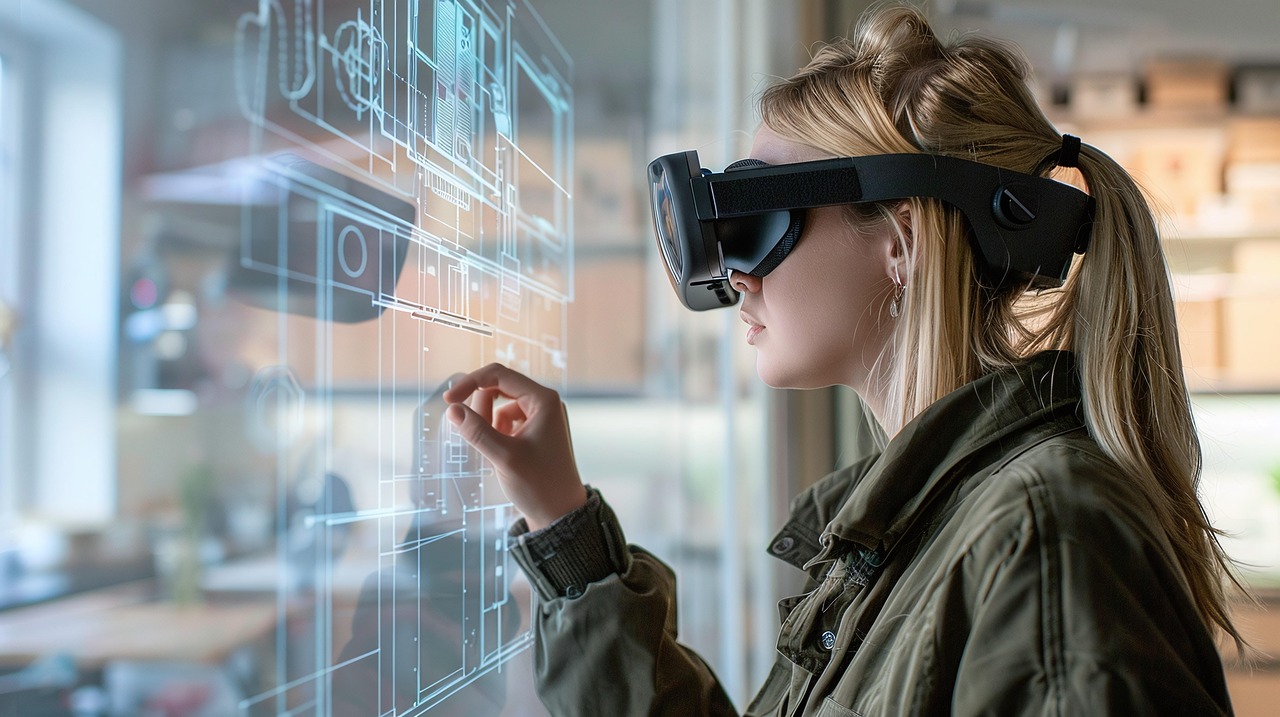
AR/VR Business and Education Solutions in Türkiye: Opportunities for 2025
As of 2025, augmented reality (AR) and virtual reality (VR) technologies have moved far beyond experimental use and are now key business tools worldwide. Türkiye, with its fast-growing digital ecosystem and entrepreneurial talent, is playing a central role in adopting these innovations. Global AR/VR investments are growing rapidly, with enterprise adoption leading the market and creating significant business and educational opportunities.
AR/VR Applications in Business
Retail and Luxury Brands
Retailers are embracing immersive tools such as virtual test drives, AR-based product try-ons, and interactive launches. AR shopping experiences significantly boost customer engagement and help buyers visualize products in real environments. For instance: customers can see how a new piece of furniture fits into their living room before making a purchase. In Türkiye’s rapidly evolving retail landscape, these tools create powerful differentiation and brand loyalty.
Healthcare Innovation
The healthcare sector has seen one of the most impactful AR/VR integrations. By 2025, the healthcare AR/VR market has reached a valuation of over 10 billion USD, with projections of almost tripling within the next decade. Technologies such as AR-assisted surgeries enhance precision and reduce operation times, while VR-based simulations allow doctors to improve skills in a risk-free environment, ultimately leading to improved patient outcomes.
Real Estate and Architecture
Immersive 3D property tours and interactive architectural tools are becoming standard in real estate and construction. Clients and investors can fully explore projects before construction begins, enabling faster decision-making, reduced design errors, and greater investment confidence.
Corporate Training with AR/VR
Safe and Cost-Effective Learning
Virtual simulations offer employees a risk-free environment to practice skills and procedures. Research shows that VR-trained learners complete courses up to four times faster and retain information more effectively compared to traditional methods. For industries such as energy, aviation, and manufacturing in Türkiye, this provides a substantial ROI.
Immersive Multi-Layered Experiences
VR-based roleplays and simulations cut training expenses by reducing supervisory costs and minimizing hazards in hands-on education. From machinery handling to complex processes, employees can use 3D models for realistic training without operational risks.
Highly Customizable Solutions
AR and VR technologies enable fully tailored learning experiences. Businesses can design sector-specific programs that match different learning speeds and needs, creating inclusive knowledge-sharing environments across diverse teams.
Transformation of the Education Sector
Enhanced Engagement and Motivation
In education, VR enhances classroom dynamics by making lessons interactive and memorable. For example: students can explore ancient Rome through immersive tours instead of relying solely on textbooks, which increases understanding and knowledge retention.
Developing Empathy and Cultural Awareness
Immersive experiences allow learners to view the world from different perspectives. Students can virtually live through various social situations, leading to deeper empathy and a better understanding of different cultures and human challenges.
Encouraging Creativity and Collaboration
Through VR artworks and collaborative design platforms, students can engage in joint projects, practice problem-solving, and develop teamwork skills. These tools prepare students for real-world innovation while enhancing creativity.
Key Technological Innovations
AI Integration
Artificial intelligence combined with AR/VR is creating hyper-personalized customer journeys, more interactive virtual characters, and real-time adaptive training systems. Smart AR glasses now even offer memory-assist functions and AI-based guidance.
Evolution of Spatial Computing
Spatial computing has expanded beyond headsets to include city-wide interactive billboards, holographic telepresence, and integrated vehicle display systems, making immersive experiences part of daily life and business operations.
Advanced Sensory Dimensions
Next-generation developments include haptic technologies with realistic pressure feedback and even scent integration in AR devices, making simulations and customer experiences far more lifelike.
Strategic Opportunities for Entrepreneurs
For international entrepreneurs looking at Türkiye, AR/VR presents a vast field of growth:
- retail: immersive AR showrooms for global audiences
- manufacturing: VR simulations to reduce training risks and costs
- tourism: cultural heritage sites enhanced with AR for visitor engagement
- education: universities and schools adopting immersive content to attract international students
- healthcare: advanced AR-assisted medical procedures and VR wellness programs
To unlock AR/VR’s full potential, it is crucial to partner with experts who can combine creativity, technical capability, and business strategy. Investment in these solutions offers measurable ROI, faster processes, stronger engagement, and reduced operational costs.
Conclusion
AR/VR technologies in 2025 have matured into indispensable tools across industries. Türkiye’s dynamic entrepreneurial ecosystem makes it an attractive hub for international investors seeking to leverage immersive technologies in education, healthcare, retail, and beyond. As adoption grows, the combination of cultural richness, digital talent, and strategic location positions Türkiye as a rising leader in the AR/VR business landscape.