Mortgage in Türkiye for Foreigners 2026: 35.2% and an FX-Only Rule
Mortgage in Türkiye for foreigners in 2026: non-residents can borrow only in foreign currency, lira rates average 35.2%, and BDDK caps loans at 20–90% of value.
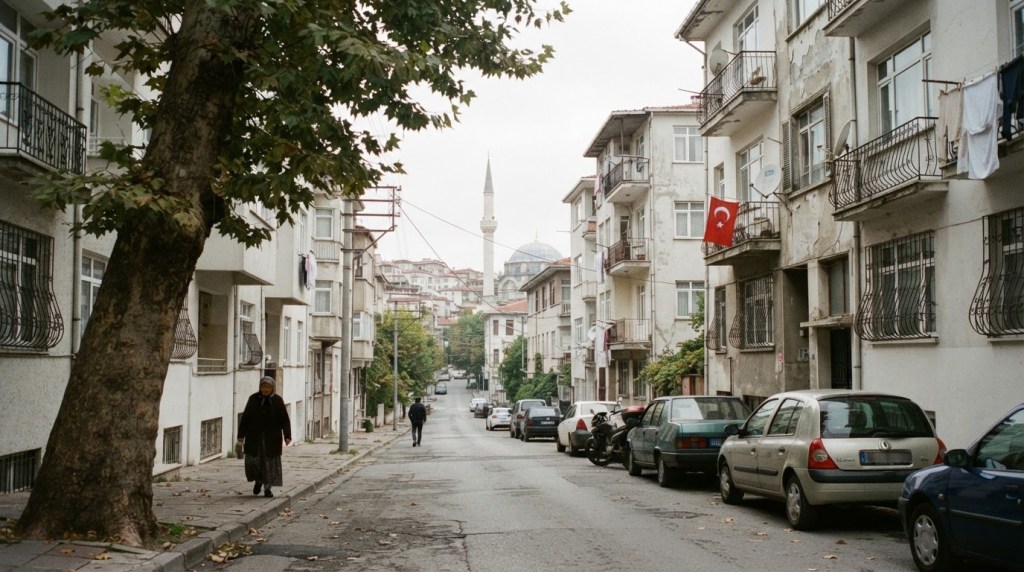
A mortgage in Türkiye for foreigners does exist, but not in the form most buyers expect: by law, a bank can lend a non-resident foreigner money to buy a home only in foreign currency, and the average lira mortgage rate stood at 35.2% a year on 30 October 2026. On top of that, BDDK caps are strict: for a home valued above TL 20 million, a bank may lend no more than 40% of its value.
Here is what applies as of 19 November 2026: who can get a mortgage in Türkiye, at what rate, how big the down payment must be, and where financed deals usually break down.
- A non-resident foreigner can get only a foreign-currency loan to buy property in Türkiye (CBRT Capital Movements Circular, Art. 13/7).
- Residents of Türkiye, including foreigners, may not take foreign-currency loans (Art. 14/1); lira loans depend on each bank’s policy.
- Average lira mortgage rate: 35.2% (30.10.2026); CBRT policy rate: 36% since 22.10.2026.
- Maximum loan: from 90% down to 20% of the home’s value, depending on price and energy class (BDDK decision No. 11364 of 29.01.2026).
- If the buyer, spouse or children under 18 already own a home, the cap is cut by 75%.
Can foreigners get a mortgage in Türkiye?
Yes, but non-residents only in foreign currency. The Central Bank’s Capital Movements Circular (Sermaye Hareketleri Genelgesi, Art. 13, para. 7) states that individuals resident abroad with no Turkish citizenship may be granted only foreign-currency loans to finance property purchases in Türkiye.
The procedure is set out too: before the title deed (tapu) transfer, the bank sells the loan amount to the Central Bank, obtains a foreign-exchange purchase certificate (döviz alım belgesi), sends it to the land registry and pays the seller in Turkish lira. You owe dollars or euros; the seller receives lira.
In practice, the exchange-rate risk stays with you, and not every bank offers the product. Each bank sets its own currency, term, rate and income requirements; the CBRT does not publish an average rate for these loans.
What if the foreigner holds a residence permit and lives in Türkiye?
Then a foreign-currency loan is off the table. Under Art. 14, para. 1 of the same circular, individuals resident in Türkiye may not borrow in foreign currency, either domestically or from abroad. A lira mortgage for a resident foreigner is possible on general terms: official sources show no nationwide ban or special permission for foreigners, and the bank decides on income, credit history and documents.
The bank determines residency from your documents (residence permit, address, income in Türkiye). Confirm your status before signing anything with the seller.
What are mortgage rates in Türkiye in 2026?
The average lira mortgage rate was 35.2% a year on 30 October 2026, according to the CBRT Inflation Report published on 12 November 2026. For comparison: consumer loans 47.9%, car loans 37.5%, deposits 35.6%.
On 22 October 2026 the Monetary Policy Committee cut the policy rate from 37% to 36%. The next meeting is on 10 December 2026. Mortgages in Türkiye are mostly fixed-rate, so the instalment is set in the contract for the full term.
| Indicator | Value | Date |
|---|---|---|
| CBRT policy rate (one-week repo) | 36% | since 22.10.2026 |
| Average lira mortgage rate | 35.2% | 30.10.2026 |
| Consumer loans | 47.9% | 30.10.2026 |
| Lira deposits | 35.6% | 30.10.2026 |
| Next rate decision | — | 10.12.2026 |
How big is the down payment? BDDK loan-to-value caps
A bank may lend between 90% and 20% of the home’s value; the rest is your down payment. The cap depends on the appraised value and the energy class (Enerji Kimlik Belgesi). The table comes from BDDK decision No. 11364 of 29 January 2026; no changes were made in October–November 2026.
| Appraised value | Class A–B | Class C | Other classes |
|---|---|---|---|
| up to TL 5 million | 90% | 80% | 70% |
| TL 5–7 million | 80% | 70% | 60% |
| TL 7–10 million | 70% | 60% | 50% |
| TL 10–20 million | 50% | 40% | 30% |
| above TL 20 million | 40% | 30% | 20% |
The caps apply to consumer loans for buying a home and to home-secured loans. Ask the bank how it applies them to a foreign-currency loan for a non-resident.
What if you already own a home?
The cap from the table is reduced by 75% if you, your spouse or your children under 18 already own a home (BDDK decision No. 10656 of 24.08.2023, still applied with the new table). Homes in villages and former villages turned into neighbourhoods under Law No. 6360 are not counted, nor is a share of 50% or less in a single property.
Example. A flat appraised at TL 5 million, energy class C. With no other home, the bank may lend up to 80%, or TL 4 million. If the family already owns a flat, the cap drops to 20%, or TL 1 million, and you pay TL 4 million yourself.
Appraisal and loan term
The cap is calculated on the appraisal, not on the contract price. Under the Regulation on Banks’ Credit Operations (Art. 12/1), the property must be valued by a BDDK- or CMB-licensed appraiser, and the table percentage applies to that value. If the appraisal comes in below the asking price, your down payment grows.
Official rules set no separate maximum term for mortgages: home-purchase loans are excluded from the general consumer-loan term limits. The bank sets the term.
Mortgage or developer instalment plan?
A developer instalment plan is a contract with the seller, not a bank loan, so BDDK caps do not apply. The developer sets the down payment, term, mark-up and the moment the title deed passes to you; there are no official averages. Check when you become the legal owner and how payments go through the secure payment system, mandatory for home sales from 1 December 2026 (details).
Costs on top of the loan
- Title deed fee (tapu harcı): 2% from the buyer and 2% from the seller, on the sale price but not below the property-tax value (see our property tax guide).
- DASK: compulsory earthquake insurance; the land registry will not complete the transfer without a valid policy.
- Appraisal (ekspertiz): paid when you apply to the bank.
- Currency risk: for a non-resident’s foreign-currency loan.
Common mistakes
- Signing before bank approval. If the bank declines or lends less, you may lose the deposit.
- Calculating the cap from the asking price. The bank uses the appraisal, which is often lower.
- Ignoring the energy class. Class C versus D means 10 percentage points of financing.
- Forgetting your spouse’s property. A home owned by a spouse or child under 18 cuts the cap by 75%.
- Borrowing in foreign currency without foreign-currency income. The debt grows with the exchange rate.
FAQ
Can a foreigner get a mortgage in Türkiye in 2026?
The rules do not restrict by nationality; residency is what matters. Non-residents: foreign-currency loans only. Residents with a permit: lira loans only, at the bank’s discretion.
What is the current mortgage rate in Türkiye?
The average lira mortgage rate was 35.2% a year on 30.10.2026 (CBRT). There is no official average for foreign-currency loans.
What is the minimum down payment?
10%, but only for class A–B homes appraised up to TL 5 million. For expensive properties it rises to 60–80%.
Can I use a mortgage for citizenship by investment?
The official documents we checked do not address this; the citizenship conditions are covered in our article on Turkish citizenship for $400,000. Discuss it with a lawyer before signing a loan.
When could rates change?
The next CBRT rate decision is on 10 December 2026. Banks adjust mortgage pricing afterwards, but existing loans are mostly fixed-rate.
Source
- CBRT, Capital Movements Circular (July 2026 version), Art. 13/7 and 14/1
- CBRT, rate decision of 22.10.2026 (2026-45)
- CBRT, Inflation Report 2026-IV, 12.11.2026
- BDDK decision No. 11364 of 29.01.2026
- BDDK decision No. 10656 of 24.08.2023
This article is for information only and is based on official sources as of 19 November 2026. It is not financial or legal advice: loan terms are set by the bank, so consult your bank and a lawyer before any transaction.